FEMaLe
FEMaLe (Finding Endometriosis using Machine Learning) is an EU Horizon 2020 project improving the diagnosis, prevention and treatment of endometriosis using machine learning and artificial intelligence. It brings together a large international consortium coordinated by Aarhus University (Denmark), and its results have to reach patients, doctors and researchers across Europe. We built a multilingual platform that turns serious scientific research into content people understand.
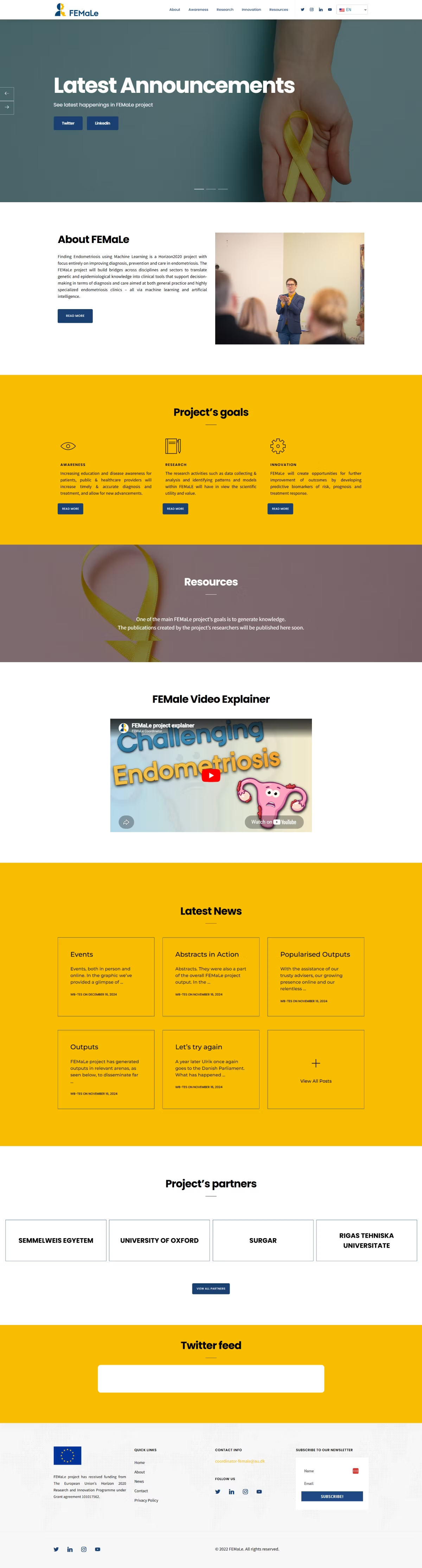
The project joins three worlds: patients, doctors (general practice and specialist clinics) and researchers. It has to speak to each in a language they understand, from personal stories to scientific papers and AI tools. The content is extensive (research, news, resources, a mobile app, decision-support tools) and has to be available in the languages of the whole of Europe, well organized and sensitive toward a condition that affects millions of women.
The same content has to work for a patient hearing the word endometriosis for the first time and for a researcher looking for methodology. So we tied the structure to the project's goals and put the personal stories ahead of the scientific results: what convinces a patient is not a study, it is someone who has been through the same thing. Multilingual support went into the foundation rather than on top, because content that arrives months later is no longer the same content.
- A platform in 24 languages for the entire European consortium
- Research, news and resources in one place
- Personal stories (“FEMaLers”) as a section of their own
- Decision-support tools and the project's mobile app
- A CMS the project team edits the content with itself
- Live at findingendometriosis.eu
How it works.
03 stepsFinds their own role
A patient, a doctor and a researcher head toward different content from the same homepage.
Hears someone who has been through it
The personal stories sit ahead of the studies, because the first break a myth and the second only explain it.
Reads it in their own language
The content sits in the language of every country in the consortium, not only in English.
Poppins is geometric, friendly and contemporary. It gives a scientific project a warm, approachable tone that doesn't intimidate patients, while Lato keeps the extensive body content readable across all 24 languages.
A deep medical blue conveys trust and seriousness. It signals that serious science and clinical reliability stand behind the project.
A warm yellow breaks the clinical coolness: hope, energy and humanity; it leads to actions and highlighted parts.
A clean, clinically tidy space that keeps the focus on information and stories.
Clear, readable text for extensive research and educational content.